

The Content Corner Guide to...the 2025 Oscars
Once again watched all the Best Picture noms so you don't have to

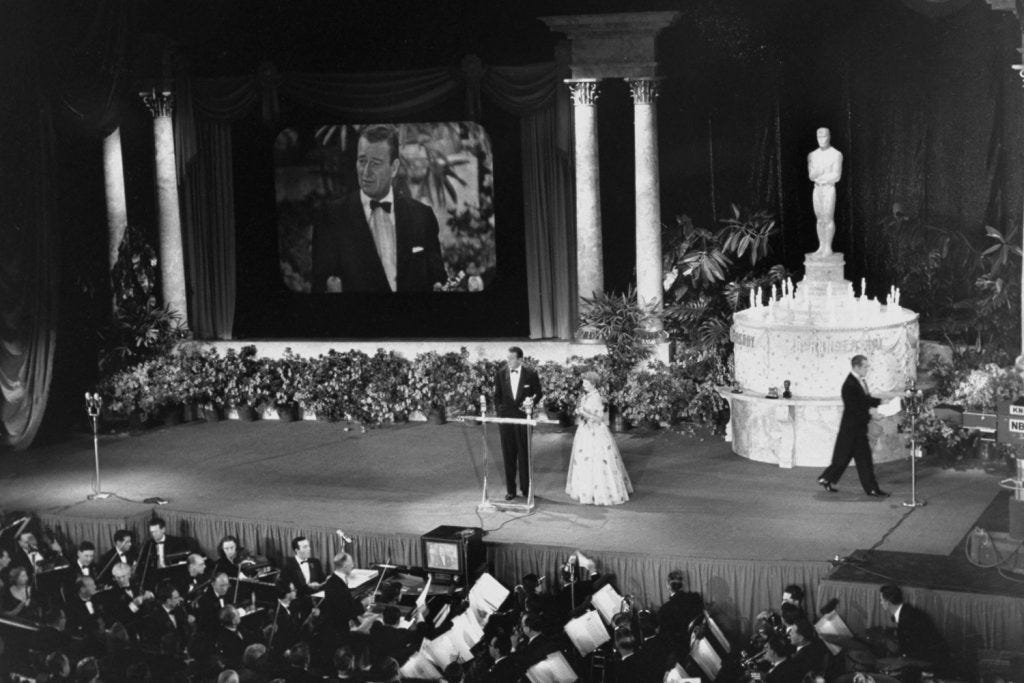
I once again watched all the films nominated for Best Picture at this year’s Academy Awards so you don’t have to. This round-up includes reposts of past reviews, as well as thoughts on the movies I watched for the first time in February, all in one place.
Let’s get into it, in alphabetical order:
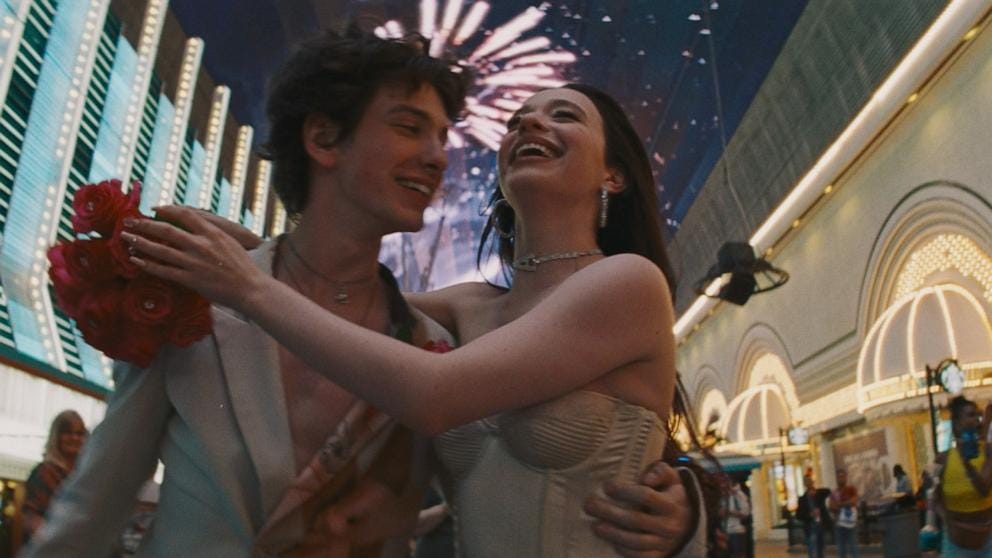
Anora (2024, dir. Sean Baker) — Pretty Woman (1990) meets After Hours (1985), Sean Baker’s latest film inhabits Brooklyn’s Eastern European-dominant community of Brighton Beach. The narrative centers on Anora “Ani” Mikheev (played by Mikey Madison), a tough-talking twenty-three year-old stripper at a Midtown club. When a customer requests a Russian-speaking dancer, Ani gets introduced to Ivan “Vanya” Zakharov (played by Mark Eydelshteyn), the hard partying 21-year-old son of a Russian oligarch. The pair gets sucked into a whirlwind romance, complete with day after day languishing in Ivan’s Brighton Beach mansion and a joyride to Vegas. But their sexual and domestic bubble bursts with the arrival of Toros (played by Karren Karagulian), Garnick (played by Vache Tovmasyan), and Igor (played by Yura Borisov), a trio of henchmen sent by Ivan’s father, launching Ani on an odyssey through and beyond Brooklyn. As Patrick Gibbs writes in his Slug Mag review: “Nothing about this story…should be humorous, yet most of Anora is a fast and furious comedy that borders on screwball farce.”
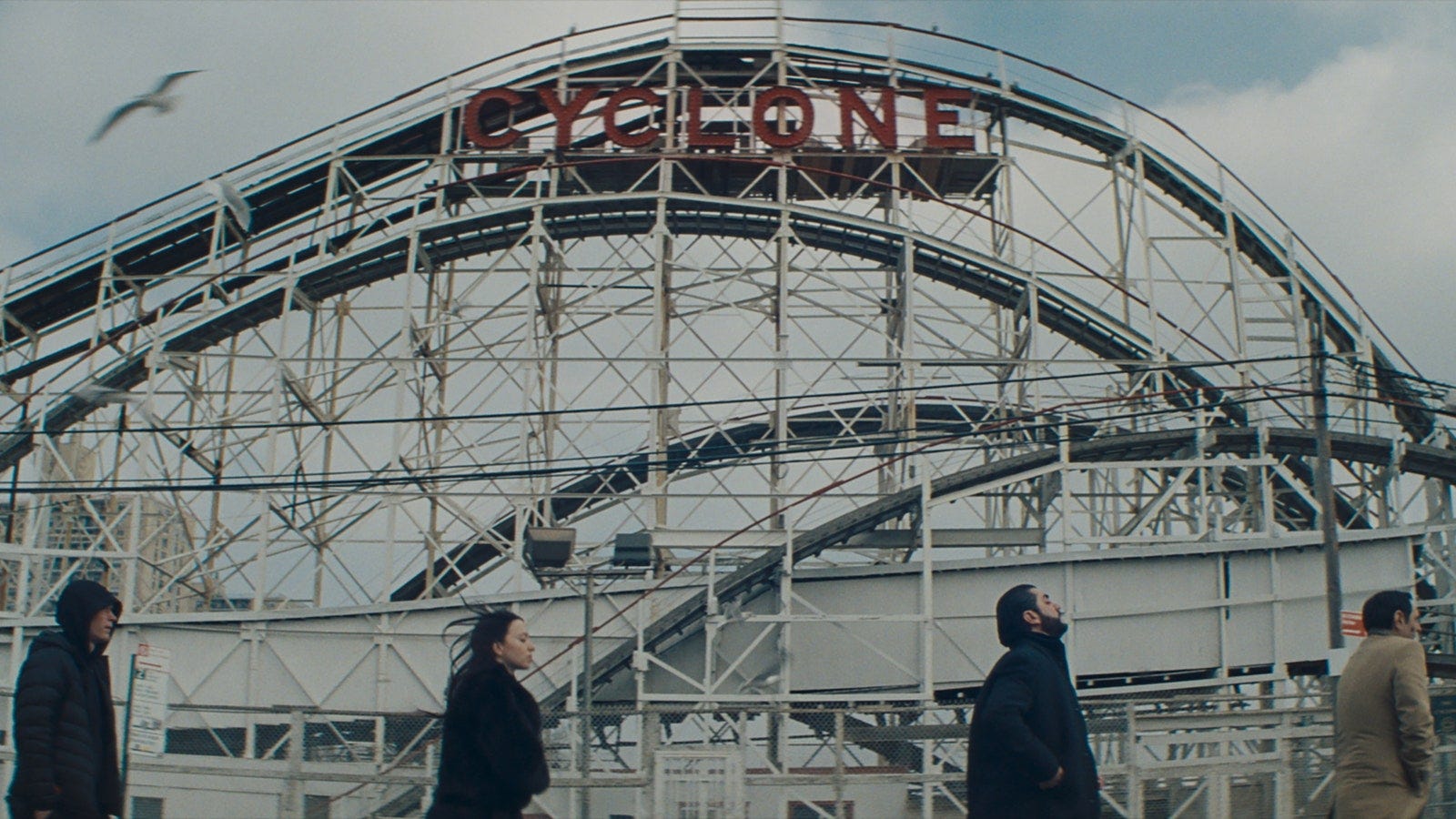
Mikey Madison stuns as Ani, the film’s final moment the crown jewel of her performance. In her review for The New York Times, movie critic Alissa Wilkinson writes: “Anora is a bawdy modern fable, populated by strippers and strongmen and brutes. Like most of Baker’s movies, it is, at its core, about the limits of the American dream, the many invisible walls that stand in the way of fantasies about equality and opportunity and pulling yourself up by your bootstraps. This is a story of wealth, and power, and what love can and can’t overcome. But it’s also about something far more heart-rending: what it means to be accustomed to being looked at one way, and then experiencing, out of the blue, what it feels like to actually be seen.” That feeling of “actually be[ing] seen” softens Ani’s hardened exterior, which seems to crack once and for all in the closing scene.
Without spoiling specifics, the endings of Anora and Wim Wenders’s Perfect Days (2023) strike me as tonally similar, emotional releases pitched at different registers. In his review of the latter film, The Hollywood Reporter’s Chief Film Critic, David Rooney, writes: “Wim Wenders ends his eloquent and emotionally rich Japanese drama, Perfect Days…held tight on the extraordinarily expressive face of Koji Yakusho as his character drives through Tokyo reflecting on the rewards and perhaps also the regrets of his life…The song that this resolutely analog man is listening to on his car cassette player is a Nina Simone standard that has become one of the most overused tracks in contemporary movies. But it fits the scene so precisely and captures the way in which the character moves through his small pocket of the world with such exactitude, it feels almost like hearing the song for the first time.” Meanwhile, Anora ends in near-silence — a quieter, more melancholic exhale, but an exhale nonetheless.
Where to Watch: ~a theater near you~, Amazon Prime Video ($5.99)
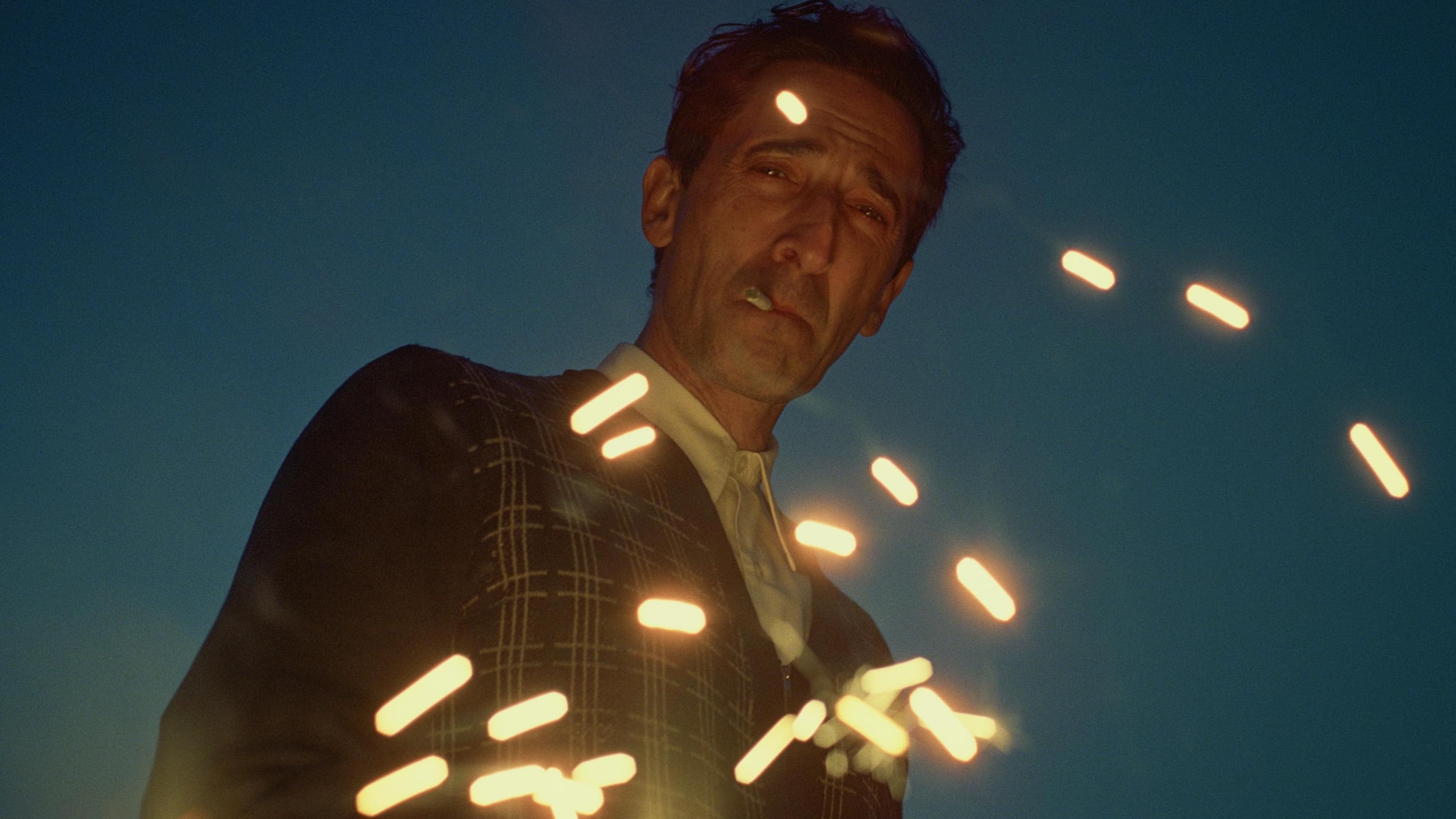
The Brutalist (2024, dir. Brady Corbet) — What my friend Rebecca (hi, Rebecca!) called “an ambitious first draft,” The Brutalist (2024) starts off promising, then packs so much plot into its three hour and 35-minute run that its characters stay as hollow sketches. As Richard Brody writes in his review for The New Yorker: “Even with its exceptional length and its ample time frame (reaching from 1947 to 1960 and leaping ahead to 1980), it seems not unfinished but incomplete. With its clean lines and precise assembly, it’s nearly devoid of fundamental practicalities, and, so, remains an idea for a movie about ideas, an outline for a drama that’s still in search of its characters.”
The epic period drama — shot on film with stunning Days of Heaven (1978)-esque cinematography courtesy of Lol Crawley — traces the life of fictional Brutalist architect László Tóth (played impeccably by Adrien Brody). A Hungarian-Jewish Holocaust survivor, László immigrates to the United States, where gets taken under the wing of wealthy industrialist Harrison Lee Van Buren (played by Guy Pearce). His star rises, then flickers as his wife, Erzsébet (played by Felicity Jones), and niece, Zsófia (played by Raffey Cassidy as a child, Ariane Labed as an adult) join him. Antisemitism and xenophobia swell, then close in on, the family.
Brody undoubtedly delivers an Oscar-worthy performance. As Tom Gliatto writes in his PEOPLE review, it “possibly surpasses his work in The Pianist. His face is capable of a tragic, suffering sensitivity and exalted artistic inspiration, as well. He looks as if his mother had insisted that he play Franz Liszt's heroically difficult piano sonatas since the age of 2. (Actually, in a long wig he might resemble Liszt.) As he did in Pianist, he manages to represent an entire era. In the film’s most moving scenes, you’re tempted to cry along with him — possibly for him — as he tearily discusses the principles of architecture and his passion for them. Post-intermission, though, the story grows more complicated, and confusing.”
The narrative structure, in many ways, bears similarities to Gabrielle Zevin’s Tomorrow, and Tomorrow, and Tomorrow (2022). ICYMI: the novel that dominated upmarket fiction discourse in the fall of 2022 follows a pair of friends, Sam and Sadie, as they launch a video game company. It begins quiet and lifelike, with an intelligent focus on the interpersonal, then takes a sharp turn somewhere around the halfway point as machinations of plot push Zevin’s well-crafted characters to the back burner. The Brutalist falls into a similar trap. Brody goes on:
The Brutalist is made solely of the cinematic equivalent of luxury components — elements of high historical value and social import — starting with the Holocaust, American xenophobia, and the trials of creative genius. [Brady] Corbet and Mona Fastvold, his partner and co-writer, quickly add some other materials of similar weight. The movie features drug addiction (László is dependent on heroin to treat the pain of an injury that he suffered when escaping from captivity), physical disability (Erzsébet uses a wheelchair because of famine-induced osteoporosis), and postwar trauma (Zsófia has been rendered mute by her sufferings)…These themes don’t emerge in step with the action; rather, they seem to be set up backward. The Brutalist is a domino movie in which the last tile is placed first and everything that precedes it is arranged in order to make sure that it comes out right. In a way, it does, with an intense dénouement and an epilogue that’s as moving as it is vague — and as philosophically engaging as it is practically narrow and contrived.
The filmmaker’s perspective, as I see it, reeks of an onlooker’s fascination. A 36-year-old Catholic-turned-atheist from Arizona, Corbet pitches everything to the highest volume rather than letting these weighty topics live amongst a textured narrative relief. As a result, each subject becomes soap operatic, the full scope of its humanity sapped.
Where to Watch: ~a theater near you~, Amazon Prime Video ($19.99)

A Complete Unknown (2024, dir. James Mangold) — I love Bob Dylan, and I love Timothée Chalamet, so, naturally, I adored this movie.
From the filmmaker behind Walk the Line (2005), A Complete Unknown (2024) opens with 19-year-old Bob Dylan (played by Chalamet) arriving in New York to bid farewell to one of his heroes, hospitalized folk star Woody Guthrie (played by Scoot McNairy). The film then traces Dylan’s rise to fame within the confines of the folk community, followed by his rejection of it at the 1965 Newport Folk Festival, where he famously went electric. It simultaneously reanimates his relationships with Suze Rotolo, renamed Sylvie Russo at Dylan’s behest (played by Elle Fanning), and Joan Baez (played by Monica Barbaro).
In the film, Dylan tells Sylvie: “If anyone is gonna hold your attention on a stage, you have to kind of be a freak…You can be beautiful or you can be ugly, but you can’t be plain.” Chalamet takes this principle to heart. He accentuates the idiosyncrasies that define Dylan without strapping into the straightjacket of imitation; he embodies the seminal artist’s singing and speaking voices, as well as his mannerisms, while still bringing freedom and flexibility to his performance. As James T. Keane writes in his piece, “A Bob Dylan Nerd Reviews A Complete Unknown” (lol), “Chalamet captures well the Dylan of that period: alternately charming and vicious, Everyman but then Mephisto.”
Some Dylan purists — including Richard Brody at The New Yorker — take issue with aspects of the film, namely its liberties with the timeline and specifics of Dylan’s life. Brody laments Mangold’s failure to show “how a young musician without a day job finds a place to live in the Village,” writing: “The movie offers answers that range from empty to artificial, leaving out the practicalities and manipulating dates and names in order to center the drama on a small number of personalities.” From my perspective, these points hardly matter. A Complete Unknown concerns itself with distilling the emotional truth of Dylan’s early artistry. By focusing on a smaller cast of characters — rather than burning screen time explaining Dylan’s leasing process or introducing a laundry list of personalities —, Mangold imbues those people who do appear with enhanced symbolic significance, conveying deeper truths about Dylan ca. 1965.
Yes, Dylan and Rotolo — Sylvie’s real-life basis — had broken up prior to the 1965 Newport Folk Festival. (Brody decries: “What the documentary understandably leaves out but the bio-pic incomprehensibly omits is that, at the time, Bob was already involved with another woman, Sara Lownds, whom he’d marry later that same year.”) But, in the context of A Complete Unknown, Sylvie’s presence at the event serves an emblematic purpose. Mangold presents the 1965 Newport Folk Festival as a liminal moment for Dylan, a personal, artistic, and cultural delineation between past and present. As Dylan parts ways with Sylvie on the eve of this artistic watershed, Mangold deepens the notion of this performance as an individual and cultural rebirth.
Where to Watch: ~a theater near you~, Amazon Prime Video ($24.99)

Conclave (2024, dir. Edward Berger) — To quote the headline of Vulture Film Critic Bilge Ebiri’s review: “Is a Movie About Electing a Pope Allowed to Be This Entertaining?”
Real Housewives of the Catholic Church, Conclave (2024) opens with the death of the Pope, then follows his advisors, the College of Cardinals, as they assemble to elect his successor. Thomas Lawrence (played by Ralph Fiennes), a British cardinal and the group’s Dean, leads this meeting, called a Conclave. (I did a lot of Googling after my screening.) Within the College, whose members hail from all over the world, ideologies diverge on a spectrum of liberal to conservative. It gets ~messy~ as the different factions try to ensure success day after day, vote after vote, with Lawrence rolling out what one Letterboxd user calls the best third-act use of a photocopier since Mean Girls (2004).
As Chief Film Critic Manohla Dargis writes in her review for The New York Times:
The story coalesces around the lead candidates, a nicely balanced group of sincere, stealthy and smooth operators who soon circle Lawrence, their silver tongues wagging and hands wringing as they make their moves…Fiennes, an actor of extraordinary expressive nuance, makes the character’s struggle palpable; you can see his sorrow, and not just for the dead pope, weighing and almost tugging him down like a millstone. At one point, while seated among the other cardinals in the Sistine Chapel, he looks up at Michelangelo’s monumental The Last Judgment and fixes on the figure of a damned man, a hunched, visibly distraught soul who’s being dragged to hell by devils. It’s a moment that suggests Lawrence’s spiritual turmoil, a struggle that, in turn, expresses the larger, deeper questions — theological, organizational — facing the church.
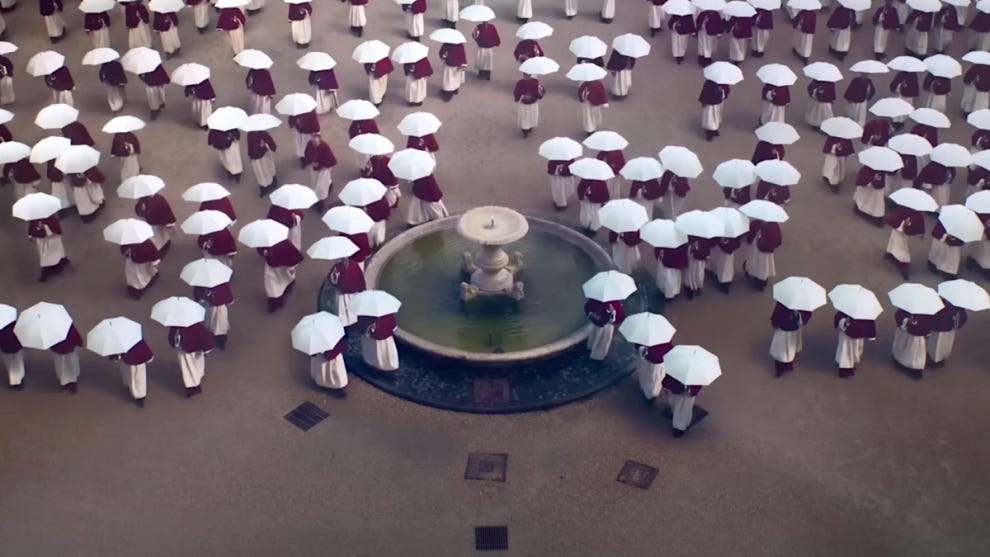
Conclave balances moments of interiority like the one Dargis describes with sweeping images of the Cardinals as a collective. This visual push and pull encapsulates the struggle between individual ambition and collective good that comprises the core of the film, creating a kind of thematic and aesthetic consistency. In her review for RogerEbert.com, Nell Minnow writes: “Cinematographer Stéphane Fontaine makes the most of the setting’s striking visuals: the rows of cardinals in their iconic red robes, the multi-color striped uniforms of the Swiss guards, and the magnificent architectural details of the Vatican. The contrast between the vibrant colors, the masterpieces of art and design, the representation of centuries of tradition, and the human failings and petty manipulations is utterly gripping.”
Drawing from the eponymous 2016 novel by Robert Harris, filmmaker Edward Berger refracts the problems that plague politics through the lens of religion. Issues of power, gender, and greed creep into its sacred structure, underscoring the Catholic church as a bureaucracy like any secular iteration. Lawrence serves as a vehicle to espouse the notion of doubt as the only viable virtue, of certainty as something to question. Conclave builds toward an unexpected conclusion that affirms this idea; Minnow goes on: “Even in the sequestered quarters, rumors, revelations, and events take the characters on a breathing, Rubik’s Cube-style series of twists and turns. The final surprise may seem outrageous initially, but it is crafted to fit the story as satisfyingly as the last piece of a jigsaw puzzle.”
Where to Watch: ~a theater near you~, Peacock (subscription), Amazon Prime Video ($5.99)

Dune: Part Two (2024, dir. Denis Villeneuve) — Slate movie critic Dana Stevens writes: “With the release of Dune: Part Two, all the meticulous (some might say exhausting) attention Villeneuve paid to building out the first movie’s vast and complex world — an interplanetary empire governed by multiple competing families, each with centuries-long dynastic histories — pays off.” It’s me. I’m “some,” and I agree. This sequel offers inventive simplicity, inverting the archetypal hero’s journey; the pull of power entrances Paul Atreides (played by Timothée Chalamet) as ambition corrodes, then subsumes, his humanity.
ICYMI: Dune: Part Two (2024) adapts the second part of Frank Herbert’s 1965 novel, which first published as the second of two serials in Analog Magazine. It picks up with Paul on the desert planet, Arrakis (aka: Dune), with his mother, Lady Jessica (played by Rebecca Ferguson). Dune: Part One (2021) shows the evil Harkonnens losing control of Arrakis, with a decree passing ownership over to the Atreides. After a massacre wipes out House Atreides, “the battle between the Fremen and the Harkonnens for control of Arrakis serves as the backdrop for Dune: Part Two, Paul’s arc from nervous young man at the beginning of the first film to potential leader plays out in the foreground,” as Brian Tallerico explains in his RogerEbert.com review.
Where Dune: Part One offers archetypes in place of people, its sequel paints its characters’ emotional lives with a finer brush. The relationship between Paul and Fremen warrior Chani (played by Zendaya) serves as one of film’s most compelling components. She promises him that, so long as he never loses himself, he’ll never lose her, then watches his identity erode. Fighting alongside the Fremen, Paul performs miracle after miracle. Their minds mold him into a messiah, the answer to a prophecy. The sole skeptic, Chani anchors him in the face of Fremen worship. In drifting from her, Paul, subsumed by self interest, loses touch with his inner life.
From Arrakis’s arid landscape to massive summoned sandworms, director Denis Villeneuve delivers visual effects that enhance the story’s Shakespearean scope. As The Observer’s Chief Film Critic, Wendy Ide, writes in her review, Dune: Part Two “elegantly weaves together top-tier special effects and arresting cinematography; it layers muscle, sinew, and savagery onto the bones of Part One.”
Where to Watch: Netflix (subscription), Max (subscription), Hulu (subscription), Amazon Prime Video (premium subscription)
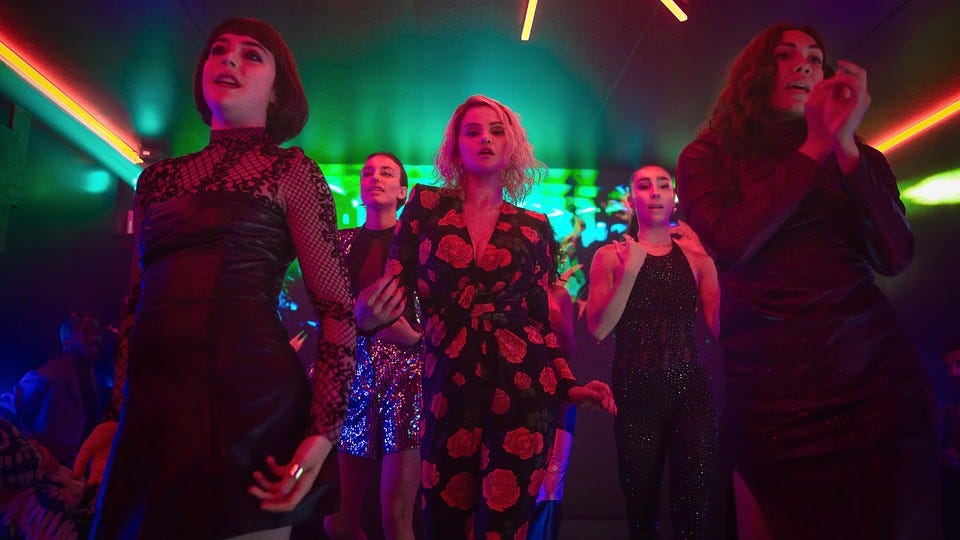
Emilia Pérez (2024, dir. Jacques Audiard) — “Jacques Audiard took a big swing with Emilia Pérez (2024).” Okay?? So did Thomas Andrews when he designed the Titanic. And, yes, Zoe Saldaña and Karla Sofía Gascón give wonderful performances, but in the same way the band who played on the deck after the iceberg hit did.
A French-but-Mexico-set musical comedy crime thriller (yeah, you read that right), Emilia Pérez opens with overworked lawyer Rita Mora Castro (played by Saldaña) receiving an anonymous call from one of the country’s biggest cartel leaders, Juan “Manitas” del Monte (played by Gascón). In hopes of covertly undergoing gender-affirming surgery, Manitas employs Rita to help him find the best doctor and disappear. After a visit to Bangkok marked by a bizarre musical number, Rita finds the right surgeon in Tel Aviv (Per The Cut: “Bangkok’s reputation as a hub for transsexual medical tourism is as well established as it is easily Googleable; I couldn’t help but laugh when I realized that Emilia had paid someone millions of dollars to uncover this basic fact for her. Nor could I stifle my involuntary snorting at Audiard’s portrayal of a surgery consult, which involved a surgeon simply naming procedures and Rita saying ‘Yes!’ to each one.”). Manitas fakes his death; sets his wife, Jessi (played by Selena Gomez), and kids up in Switzerland; and sends Rita off to London with a large sum of money, embarking on a new life as Emilia Pérez.
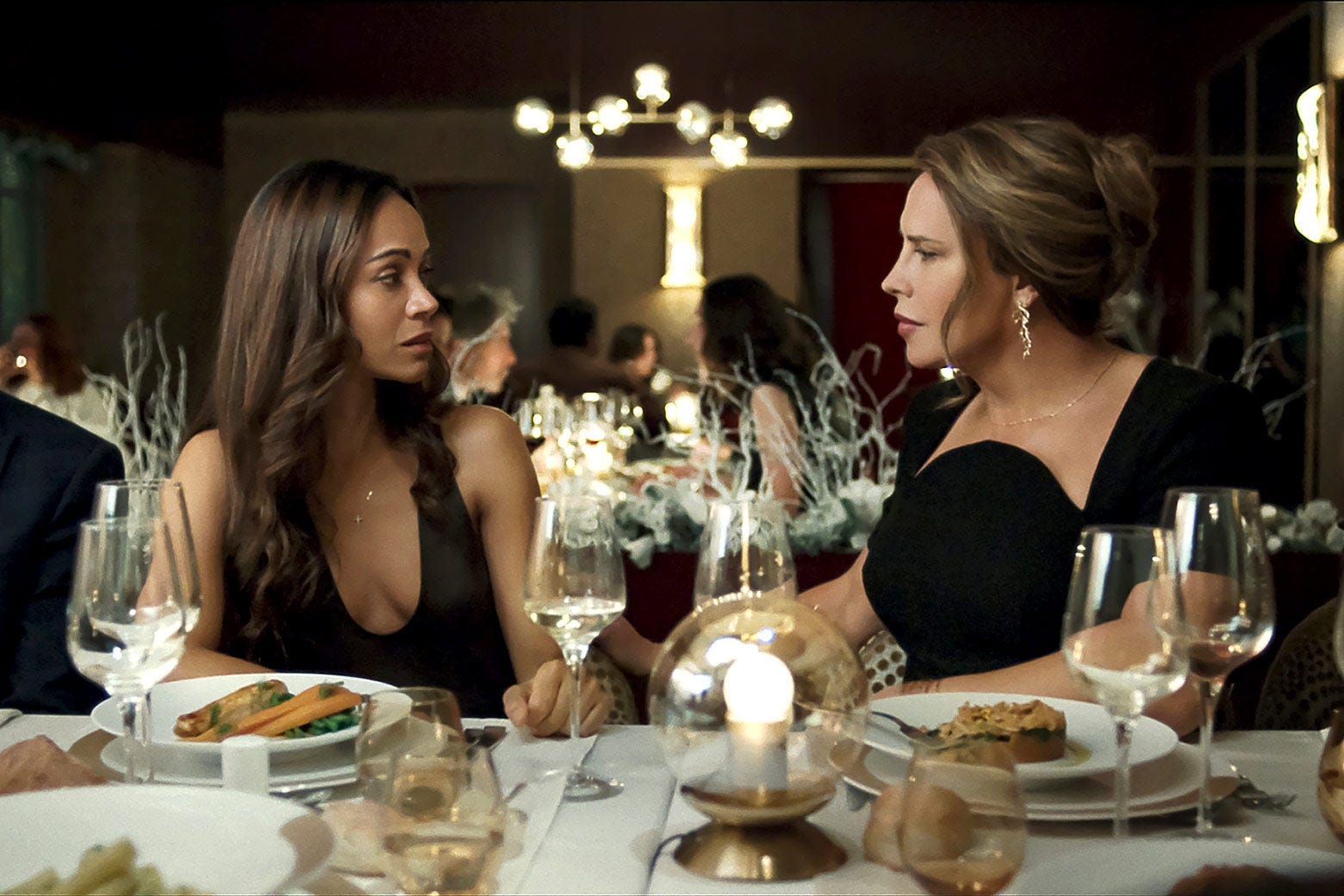
Four years later, Rita meets Emilia in London, quickly discerning her former identity. Emilia asks for help reuniting with her children, launching a telenovela-esque reunion that puts Jessi and their kids back in Mexico City alongside “Aunt” Emilia. In search of redemption, Emilia simultaneously launches a nonprofit to help families reunite with “desaparecidos,” or people presumed dead at the hands of the cartel violence she once incited, alongside Rita. Meanwhile, Jessi rekindles her relationship with Gustavo (played by Édgar Ramírez), the object of her affection during her marriage to Manitas, stoking jealousy in Emilia as the movie limps, then barrels, toward its conclusion. (If you feel like you just came off an acid trip after reading that, imagine actually watching the movie.)
Structurally, Emilia Pérez bears similarities to Mary Gaitskill’s The Devil’s Treasure: A Book of Stories and Dreams (2021). As I discuss in the June Book Review, the book “serves as equal parts short story, literary criticism, and anthology. In it, Gaitskill aggregates snippets from her various novels and writings over the years — from Two Girls, Fat and Thin (1998) to Veronica (2005) to The Mare (2015) — and analyzes her influences with the gift of hindsight. She simultaneously pens a new short story about a little girl in search of treasure that dovetails with her chosen cuts.” Both Emilia Pérez and The Devil’s Treasure extract elements from various genres, bleeding each one of its depth in the process. The film and novel emerge as everything and nothing.
On a tonal level, both Gaitskill and Audiard explore cultures and perspectives beyond their own — with limited nuance. In her 2019 essay for The New York Review, “Fascinated to Presume: In Defense of Fiction,” Zadie Smith discusses the question of who has the right to tell others’ stories, writing: “Is this novel before me an attempt at compassion or an act of containment? Each reader will decide. This is the work of an individual consciousness and cannot be delegated to generalized arguments, not even the prepackaged mental container of ‘cultural appropriation.’” I frequently use Smith’s piece as a framework for evaluating film and fiction. In my review of The Devil’s Treasure, I write:
Gaitskill reveals that she based Velvet [Vargas, a Dominican girl who operates as the main character in The Mare] on a young woman whose emotional life she knew quite well. That said, she had limited optics into how this teenager interacted with her mother. Nonetheless, without interviews or research, Gaitskill writes from the perspective of Velvet’s mother, relying on feeling alone to sustain her work. As a result, I would classify The Mare’s narrative as what Smith calls “an act of containment,” “an attempt at compassion” gone wrong, sloppily spurred by her faulty assumption of “awkwardness” as “inevitable.” Gaitskill’s persistent defense of it, to me, weakens The Devil’s Treasure, dilutes the potent self-reflection that shapes its earlier passages.
Similarly to Gaitskill, Audiard, a Frenchman through and through, animates a version of Mexico rooted in admiration and stylization rather than research (Audiard: “No, I didn’t study much, I kind of already knew what I wanted to understand.”). Per The New York Times, Audiard “doesn’t often enjoy musicals and doesn’t speak Spanish…He lifted his protagonist from the pages of Boris Razon’s 2018 novel, Écoute, about our hyperconnected, perpetually online world. One chapter features a ruthless Mexican cartel boss seeking a gender transition who hires a lawyer to help with the logistics.” The film crew includes people who possess a deep understanding of the language and the culture that shape the film; for instance, French songwriter Camille partnered with Mexican translator Karla Aviles on the film’s lyrics. But the creators at its core approach the narrative from the outside (Audiard: “Throughout the shoot we had problems, for instance, with Selena’s accent in Spanish. She is Texan. Karla Sofía Gascón speaks Castilian Spanish. She’s from Madrid. Given that I don’t speak Spanish, the nuances of the Mexican accent versus the Castilian were lost on me.”). As a result, I would deem Emilia Pérez what Smith calls an “act of containment” and a lazy one at that, a poorly-executed pastiche shot in a Paris studio.
Audiard’s emphasis on stylization over substance bleeds over to his portrayal of Emilia herself as well. To close, I’ll echo certain excerpts from award-winning trans journalist Harron Walker’s review of the film for The Cut. She writes:
I don’t demand total realism from every film that I see. I can even appreciate the camp, whether intentional or not, of Emilia waking up from her 5-million simultaneous surgeries, her face bandaged like a mummy save for her eyes and lips. But I expect that a filmmaker so taken by the concept of transitioning, one who’s displayed a certain level of conscious sensitivity in his previous efforts to depict lives unlike his own, to at least display an informed understanding of what that concept actually looks like in practice.
On the one hand…[Emilia Pérez] affirms Emilia’s claim to womanhood, to a ridiculous degree at times…On the other, it presents Emilia as a nesting doll of gendered selves…This emerges most revoltingly during a scene in which Emilia grows upset with her unsuspecting widow, played by Gomez, and responds by throwing her onto a bed and choking her, while threatening her in a low, masculine voice — the same voice with which she spoke before she surgically transitioned.
Overall, though, the film presents transition as inherently redemptive. In Emilia’s case, she not only transitions from male to female…She also transitions from a cartel leader responsible for the deaths of untold thousands to the founder of a nonprofit that seeks to assist the families of victims of cartel violence…Gascón gives an incredible performance, as do all of her co-stars, but I loathed her character, largely because I sensed that the film wanted me to like her, to root for her transition from an evil rich man to an evil rich woman, to celebrate her solely for the fact of her transition…[Audiard is] so focused on wanting to humanize her — in patronizing, at times insulting terms — that her humanity is sacrificed in the process.
Where to Watch: Netflix (subscription)

I’m Still Here (2024, dir. Walter Salles) — What an unbelievably stunning film. Set against the backdrop of Brazil’s military dictatorship, I’m Still Here (2024) enlivens the true story of former Labor Party congressman Rubens Paiva’s 1971 disappearance. Both personal and universal, the movie serves as a microcosm, an intimate example — based on his son’s eponymous 2015 memoir — of the kind of state-sponsored violence that ran rampant from 1964 until the country’s reintroduction of democracy in 1985.
Light floods the film in its opening minutes. Sun ripples through the water in Rio. A woman — Rubens’s wife, Eunice (played by the incomparable Fernanda Torres) — floats in the waves, then makes her way toward the shore, where her five children play volleyball on the sand. A dog interrupts the game, brought back home and adopted by her son, Marcelo (played by Guilherme Silveira). The Paiva family’s corner house borders Leblon Beach, its doors and windows perennially open. Friends and neighbors come and go, and their oldest daughter, Vera (played by Valentina Herszage), shoots it all on her Super 8 camera. Cinematographer Adrian Teijido slips into the perspective of her shots, refracting certain sequences through the palette of 16mm.
Director Walter Salles creates an ambient reanimation of the family’s life, then sucks the color out of it. As Robert Daniels writes in his RogerEbet.com review: “Their house is a bustling, lively space filled with brightness, music, art, and books. It’s a cosmopolitan atmosphere brimming with culture, where dance parties soon become cigar-smoke-filled salons. Fresh hues of forest green, cobalt blue, and marigold yellow vibrate in this vital space. Their daily lives in and around the home are often recorded through epistolary means, 16mm home movies, and personal photography, moments of documenting that will be juxtaposed with the paperless trail the family will soon deal with. By taking time to live inside the family’s insecure bubble, Salles makes the eventual puncturing even more agonizing.”
Signs of danger encroach from the outset. As Eunice swims, a military helicopter cruises over the ocean. Vera and her friends get stopped at a government checkpoint on their way back from the movies. Soldiers drive past the beach in droves. The political moves from the fringes to the forefront until it eats away at, then envelops, the family. After Rubens (played Selton Mello) gets taken away for a “deposition,” the Paivas’ home loses its light. The curtains and doors close. The narrative culminates with the house’s sale, the family’s relocation from Rio to São Paulo. Salles shows this move from the perspective of a child as the youngest Paiva daughter, Maria (played by Cora Mora), holds her favorite doll, stares at the empty living room on the verge of tears.
The bulk of I’m Still Here takes place in 1970 and 1971 before yielding to two subsequent time jumps — one to 1996, another to 2014. The ripple effect of Rubens’ disappearance across years and generations crystallizes. Closure emerges as a theoretical ideal. Photos of the real Paiva family, title cards revealing their final fates, end the film. To me, the 1996 and 2014 scenes carry educational rather than artistic value. The 1970-1971 narrative wraps with such a tenderizing sequence that I would have preferred the closing title cards follow it. Salles’s central strength as a director comes in his ability to cultivate emotional impact through atmosphere; this component cracks with the time jumps, lessening an otherwise perfect film.
Where to Watch: ~a theater near you~
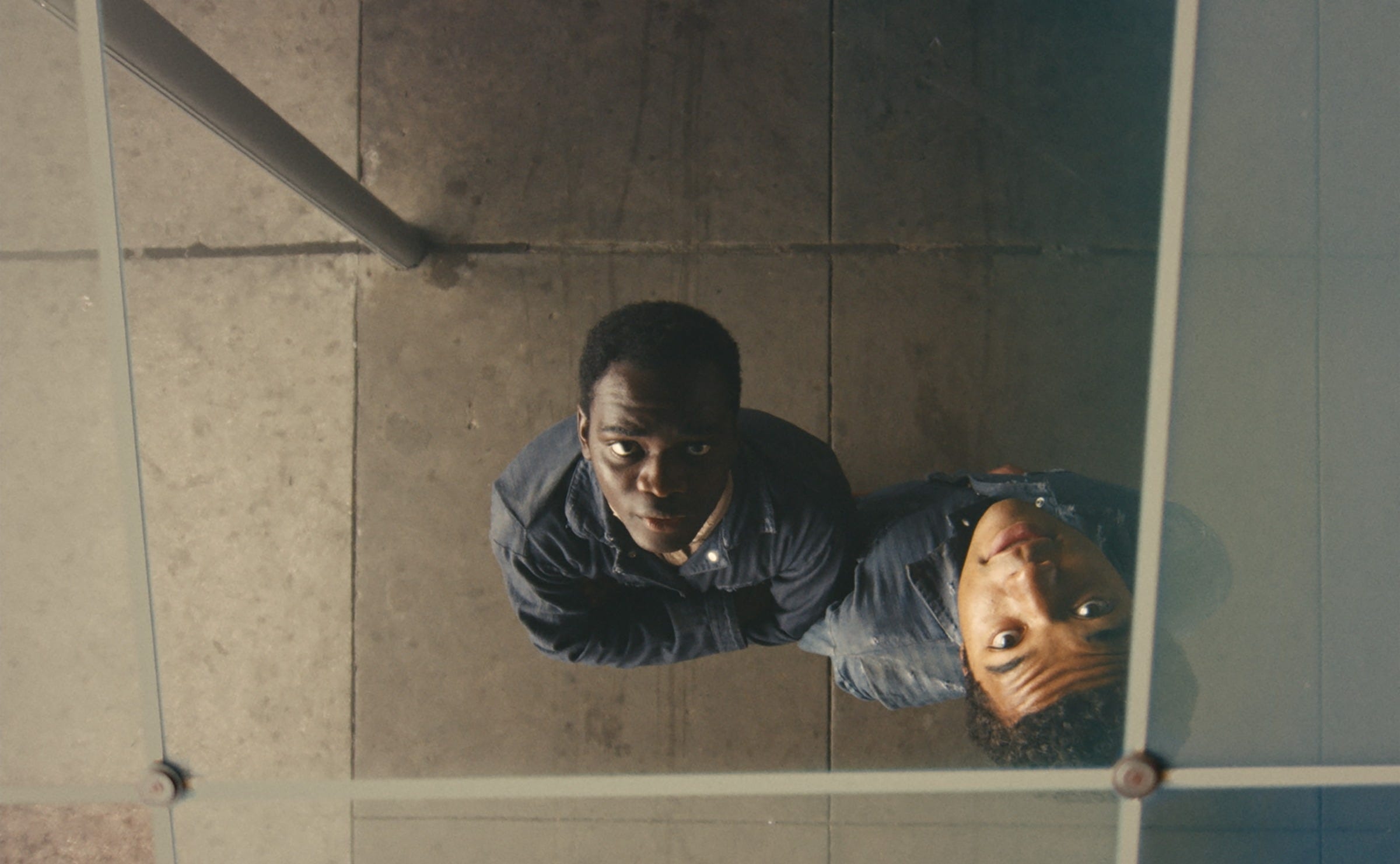
Nickel Boys (2024, dir. RaMell Ross) — Based on the eponymous Pulitzer Prize-winning novel by Colson Whitehead from 2019, Nickel Boys (2024) opens with a hypnotic sequence, a series of scenes seen from below, then straight on; tinsel tossed on a Christmas tree, a child’s hands gripping monkey bars. As Martin Luther King Jr.’s “I Have a Dream” speech plays on a stack of televisions in a shop window, the glass reflects a little boy: Elwood Curtis (played by Ethan Cole Sharp as a child, Ethan Herisse as an adult). Here, the film’s central character becomes embodied for the first time, but only as a flicker. Director RaMell Ross shows Elwood full a few years later, confronted by a police officer. The camera adjusts into an aerial view, animating a kind of out-of-body experience.
A Black boy growing up in Jim Crow Florida, Elwood begins the film steeped in academic promise, maneuvering around the racism that presses up against a quiet life alongside his grandmother, Hattie (played by Aunjanue Ellis-Taylor). He gets accepted to a HBCU, but never has the chance to attend after he unknowingly hitches a ride with someone driving a stolen car. Instead, Elwood ends up in an internally segregated reform school called Nickel Academy, separated from his beloved grandmother, with a boy named Turner (played by Brandon Wilson) as his only guide. Nickel operates as a fictional avatar of Dozier School for Boys, the state-run Florida academy that shut down in 2011 after scores of past students came forward with accounts of rape, abuse, and even murder. As Elwood starts to ask questions about the administration’s actions, deeper danger encroaches.
Ross shifts from first person into a close third after the introduction of Nickel. The camera moves beyond Elwood, into others’ perspectives and out entirely. One of the most poignant scenes shows Hattie at Nickel, devastated after the administration refuses to let her see Elwood. She runs into Turner, and the camera adopts his point of view. Ross tells The New Yorker that, while Ellis-Taylor struggled to film this scene without an actor on the other end, that loneliness fed into, helped power, her performance. In his review for The Nation, critic Stephen Kearse writes, “The camera [often] assumes the gaze of Turner, a more experienced navigator of the school’s twisted systems. His strategy for surviving Nickel’s horrors is to ignore them, keep his head down, and steal away time for himself. This approach differs sharply from Elwood’s idealism, but the two become inseparable, and Nickel Boys begins to feel like a summer-camp adventure as their friendship blossoms. As the camera jumps between them, the world seems to glow despite their violent surroundings.”
Archival footage of sociopolitical touchstones, from the March on Washington to Sidney Poitier movies, emerge over the course of the movie. In his RogerEbert.com review, Robert Daniels underscores how “black and white stills of incarcerated Black kids, Black children celebrating holidays, and visions of Apollo 8 alter our interactions with the white-owned historical record with which the film is contending.” These insertions infuse Nickel Boys with the mood of its era — through the prism of its characters’ perspectives. Kearse goes on: “Period pieces tend to privilege verisimilitude and accuracy, turning the past into a live-action diorama. Nickel Boys has a more narrow focus, intensely concerned with the immediate world of its subjects…[Ross] zooms in on the precarious joys of Black boyhood, extracting wonder from tiny delights.”
Kearse critiques Ross’s approach for its failure to establish interiority, whereas, to me, how you perceive your surroundings reflects your inner life. Daniels points toward that pressure between internal perspective and “the abusive outside world,” how it imbues Ross’s stylistic leaps with both form and function to create “a fully-realized experience that builds upon and deconstructs decades worth of film grammar.” My primary bone to pick with Nickel Boys lives on a narrative rather than formal level. Without spoiling specifics, the film’s flash forwards culminate with a corny commercial fiction-esque twist that, as I see it, cheapens the quality of an otherwise mesmerizing movie.
Where to Watch: MGM+ (subscription), Amazon Prime Video ($5.99)

The Substance (2024, dir. Coralie Fargeat) — Where do I even begin? I adored this film, though I’ll reiterate the advice my friend Angela (hi, Ang!) got from her brother on our way to see it: don’t eat, especially during the first half.
A co-production between the United States, France, and the UK, The Substance (2024) premiered at the Cannes Film Festival this spring, where it garnered an eleven-minute standing ovation. Filmmaker Coralie Fargeat took home the award for Best Screenplay, with performances from Demi Moore, Margaret Qualley, and Dennis Quaid rightly receiving critical acclaim. The film focuses on Elisabeth Sparkle (played by Moore), an aging actress unceremoniously fired from her job as the host of an aerobics TV show on her 50th birthday. Her producer, Harvey (played by Quaid in a role that I fear has ruined his sex appeal for me), thinly veils his desire to trade her in for a newer model, saying that “everything stops” for women at 50.
As freelance film critic Tomris Laffly describes in a piece for ELLE: “It’s around that time that a mysterious encounter introduces her [Elisabeth] to ‘The Substance,’ a freaky, self-administered injection that births (through a gruesome, spine-splitting sequence) an alternate and much younger version of herself we’ll come to know as Sue (an electric Qualley). There are only two rules to follow. First, she has to remember that the two versions are still one person — there is no individual ‘Sue’ or ‘Elisabeth.’ And the second is, only one version will be out in the world at one time, while the other hibernates in a coma-like state. At the end of each week, it’s time to switch. Absolutely no exceptions.”

Many people on and beyond Letterboxd have described The Substance (2024) as Barbie (2023) by way of body horror originator David Cronenberg, with its French filmmaker, Coralie Fargeat, acknowledging the influence of Cronenberg, John Carpenter, and David Lynch on her work. The Substance operates in a genre originated by Cronenberg, draws on prosthetics pioneered by Carpenter. A candy-coated color palette juxtaposes with sinister flashes of the city at night, interspersed with flickers of palm trees that seem to signal a Lynchian Los Angeles. Fargeat, to me, however, emerges as a daughter of Brian De Palma above all else, the latest in an exclusive line of horror auteurs.
Where Joan Didion copied Ernest Hemingway’s sentence structure only for Bret Easton Ellis to do the same — and apply it to coked out LA teens in Less Than Zero (1985) —, Fargeat reanimates certain signatures De Palma borrowed from Alfred Hitchcock, creating a filmic lineage comparable to the aforementioned literary one. Each successive application — from Hemingway to Didion to Ellis, from Hitchcock to De Palma to Fargeat — marks a new expansion, adds a new layer of meaning derived yet distinctive from its original form. In The Substance, an early shot lingers over Demi Moore’s body in the shower, a comparable image to De Palma’s literally and figuratively explicit homage to Hitchcock in Dressed to Kill (1980). More overt nods to De Palma emerge as The Substance swells toward its disturbing conclusion, but the aesthetic ancestry of Fargeat’s initial shower scene most compels me.
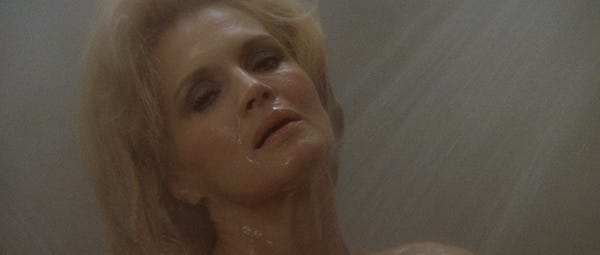
Both Moore’s Elisabeth Sparkle and Dickinson’s Kate Miller feel a particular flavor of sexual frustration, one sparked by men who consider age a neutering force in women. Fargeat, however, draws focus to perceived imperfections, refracting De Palma’s shot through a female gaze. As she tells ELLE: “There are two different relationships with nudity in the film…The one in the bathroom of Elisabeth’s home is the symbol of the relationship she has with herself. It’s the place where nobody looks at her, there is no gaze. She is just judgmentally facing herself in the mirror. Nothing is sexualized. This led me to shoot it in a very specific and internal way, in this white, transformational chamber that is her bathroom.”
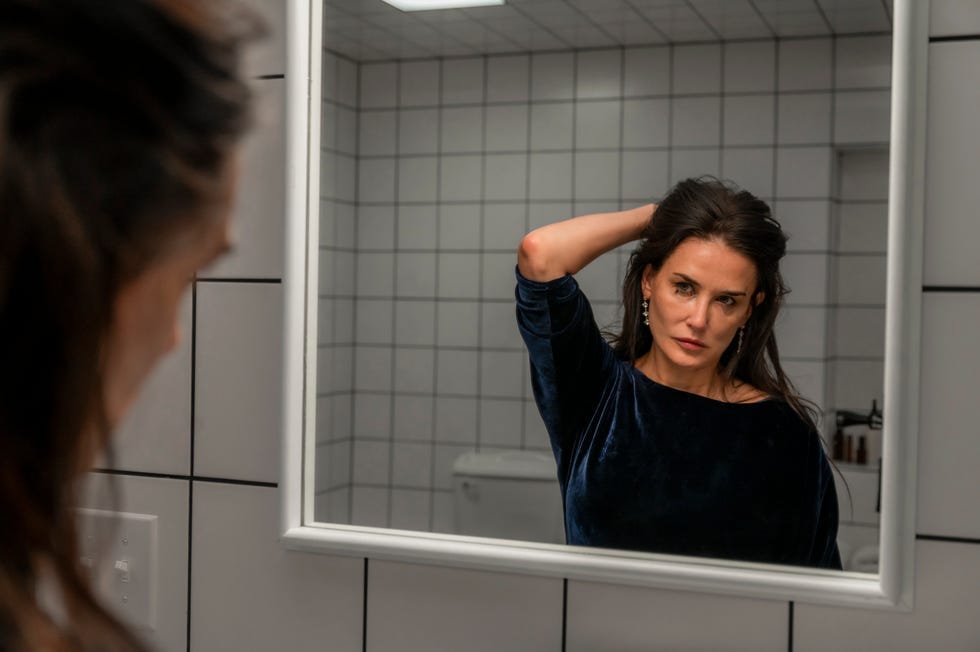
Fargeat establishes the audience as a particular kind of voyeur, an observer of Elisabeth across protracted internalized moments. Dialogue emerges only when necessary, replicating the sensation of reading a well-crafted literary fiction novel on screen. But external perception also propels the plot, as Fargeat underscores the perceptual scrutiny women face, a different dialect at every age. Describing “the second type of nudity…conceived in complete contrast,” she explains: “I really wanted to express that when you’re a woman, your body is everything but neutral in the public space…It’s constantly scrutinized, judged, analyzed, fantasized, sexualized. And you can’t ignore it. It [also defines] how we are allowed to invest in the world…It’s a super powerful jail that prevents us from taking up space. That inequality is so internalized and the weapons that are internalized are the strongest ones.”
Where to Watch: Amazon Prime Video (premium subscription)
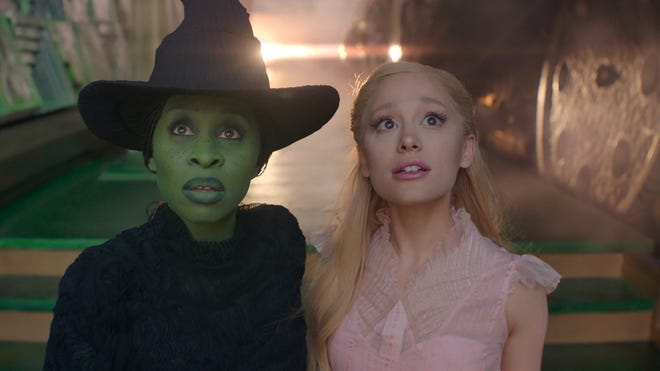
Wicked (2024, dir. Jon M. Chu) — I really went into this movie prepared to be a hater. The marketing blitz preceding its premiere struck me as so over the top (see: Vulture’s breakdown of the most egregious stunts) and manufactured (see: bizarre integrations with The Bachelorette). Plus, its stars’ press interviews exuded the worst kind of cringe theatre kid energy. As E.J. Dickson, Senior Culture Writer at The Cut, puts it:
Many on social media found [Ariana] Grande and [Cynthia] Erivo’s behavior puzzling…But as someone who went to a performing-arts camp for four years, I can tell you exactly what’s going on here. Grande and Erivo are behaving the exact same way the two leads in your senior-year production of Legally Blonde do when they’re in tech rehearsals and carrying vocal rest whiteboards and they’re finally realizing that one of them is going to Carnegie Mellon next year while the other is going to BoCo. It’s a level of psychic stress that no one who has [sic] been outside that situation can really understand, akin to undergoing combat training in the Marine Corps or attending a Renaissance Fair with a bunch of fire eaters who have done too many mushrooms. It’s a world that is so grueling and insular that it truly feels like there’s nothing outside the universe of your show and your castmates. In fact, if I were interviewing Grande and Erivo on the press tour, I’d probably ask them if they knew the results of the presidential election. I’d bet money they don’t, and you know what? Why should they? They were busy holding space for “Defying Gravity.”
Unfortunately though, I had the time of my life. Five stars (okay, four and a half if you’re fact checking on my Letterboxd), no notes.
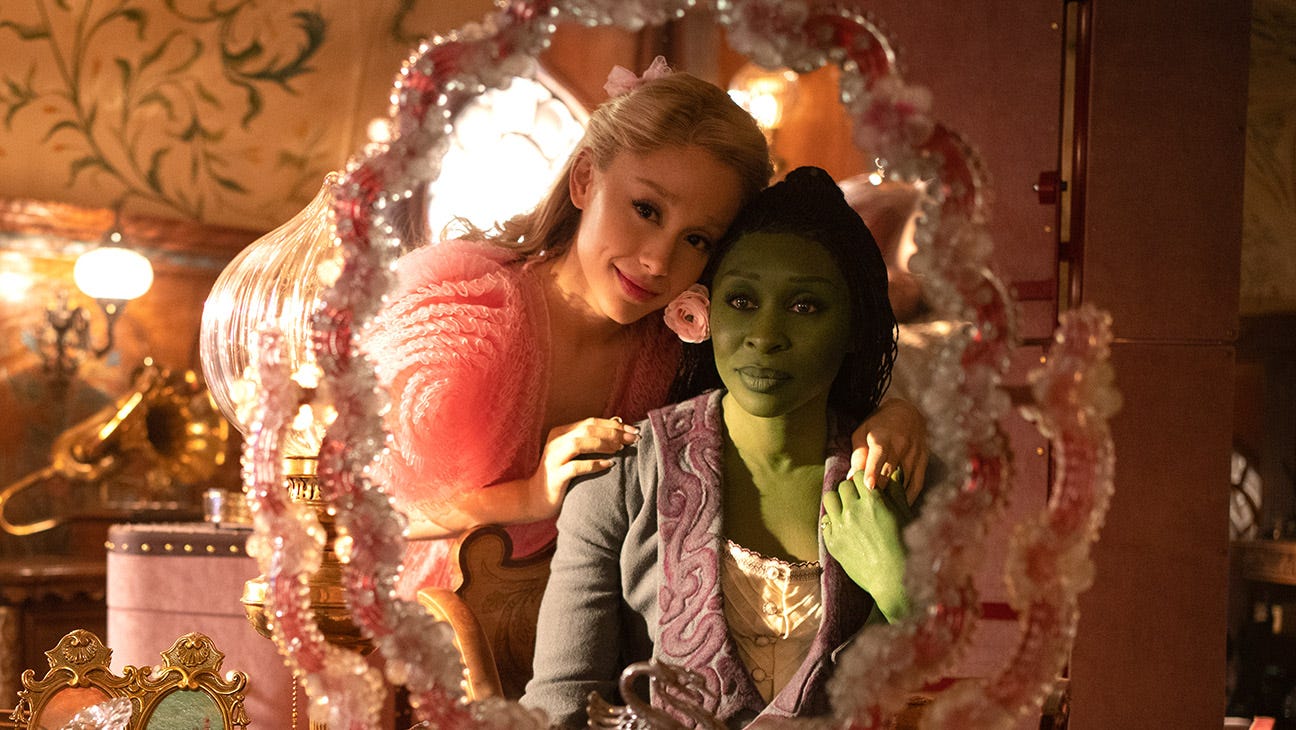
ICYMI: Wicked (2024) — based on the 2003 Broadway musical from Stephen Schwartz, based on the 1995 novel by Gregory Maguire — essentially operates as elevated Wizard of Oz (1939) fan fiction. It traces the hidden history of a friendship between Glinda the Good Witch (played by Ariana Grande) and The Wicked Witch of the West, Elphaba (played by Cynthia Erivo). The narrative begins with Elphaba’s death by water bucket at the end of The Wizard of Oz, then returns to the school days that shaped both witches. It disrupts the notion of an official narrative, tackling themes ranging from animal rights to government corruption to, of course, female friendship.
Maximalism marks the opening number and first few sequences. Filmmaker Jon M. Chu’s showmanship never fully fades, but, as the narrative unfolds and gains nuance, it feels less obtrusive. In his Vulture review, film critic Bilge Ebiri aptly writes: “When things do occasionally quiet down, the actors shine. With her pagoda-roof eyelashes and her quicksilver physicality, Grande gives real comic shape to Glinda’s popular-girl frivolity. She also pokes fun at her own terrific vocal range, tossing errant high notes into simple statements like ‘I already have a private su-iiite.’ Erivo arguably has the harder task. Elphaba is the one who goes from rejection and sadness to love and stridency and, finally, rage.” From my perspective, Erivo embodies each emotional beat, delivering a powerful performance that fuels the heart of the film.
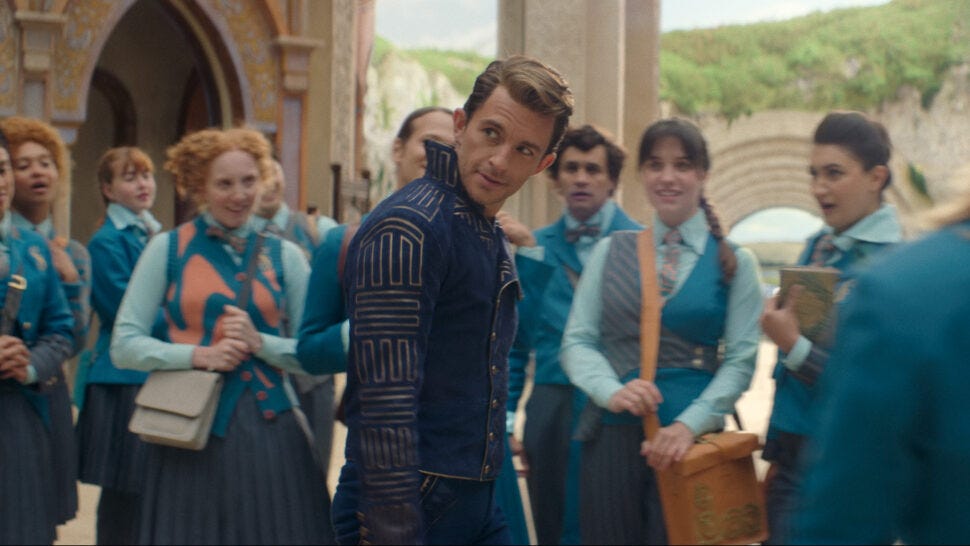
The supporting cast — which includes Jonathan Bailey (I guess I need to watch Bridgerton now?), Jeff Goldblum (who has no business wearing a green tux as well as he does here), and Michelle Yeoh — matches this caliber. As Christy Lemire writes in her RogerEbert.com review: “[Filmmaker Jon M.] Chu's usual choreographer, Christopher Scott, delivers…with vibrant, inspired moves, particularly in the elaborate ‘Dancing Through Life,’ which takes place in the school’s rotating, multilevel library. Bridgerton star Jonathan Bailey gets a chance to show off his musical theater background here, and he's terrifically charming as the glib Prince Fiyero, the object of both Elphaba and Galinda’s romantic interests. Michelle Yeoh brings elegance and just a hint of danger to her role as Madame Morrible, the university's sorcery professor. And Peter Dinklage lends gravitas as the resonant voice of Dr. Dillamond, a goat instructor who, like other talking animals in Oz, finds himself increasingly in peril.”
Wicked (2024) covers the Broadway musical’s first act, with part two slated to hit screens next fall. It still clocks in at two hours and 40 minutes, a running time I thought unconscionable until I actually saw the film; the length breathes depth into the story and characters, layering onto the spackle of the stage production.
Where to Watch: Amazon Prime Video ($19.99)
Okay, that’s all for now! Oscars ballot drops in the morning!
xo,
Najet
More Anora everywhere! More Mikey Madison!
If there was an academy award for best single frame, the umbrella image from conclave you included would be taking the praise FOR SURE